Fuel costs are one of the largest operating line items for any business that relies on diesel generators, especially in regions where grid reliability is uncertain. If you manage telecom sites, construction fleets, events, or industrial standby power, small improvements in fuel efficiency add up quickly, improving uptime and reducing operating expense.
In this practical guide we cover real-world steps for Maximizing Fuel Efficiency in Diesel Generators, from site selection and load management to maintenance, controls, and fuel quality. You’ll get actionable tactics that work for B2B operators across Africa, the Gulf, and worldwide, whether you run single standby units or fleets of prime-power sets.
Why fuel efficiency matters now
Fuel is a recurring cost you can control, unlike some fixed capital expenses. For businesses operating in high-fuel-cost or remote markets, improving diesel generator fuel economy reduces total cost of ownership, lengthens run windows between refuels, and lowers logistics complexity. Beyond cost, efficient operation reduces emissions and supports corporate sustainability goals.
Quick overview: where losses happen
- Running the generator at very low or very high loads, both of which reduce specific fuel consumption.
- Poor maintenance, including clogged filters, worn injectors, and degraded coolant that lower combustion efficiency.
- Suboptimal fuel quality and storage losses, such as water contamination or microbial growth.
- Inefficient site design and heat/power waste, like unused engine heat or long electrical distribution runs.
Practical steps to maximize fuel efficiency
1. Right-size the generator
Choose a generator that matches typical load, not just peak. A unit that sits at 15 to 25 percent load most of the time will burn disproportionate fuel per kW. For standby applications with long idle periods, consider paralleling smaller sets or installing an inverter/UPS for critical electronics, so the diesel runs in optimal bands. Learn more about our tailored equipment selection on our products and services pages: Ritewat products page and Ritewat services page.
2. Optimize loading and use load management
Generators are most fuel efficient at moderate loads, typically 60 to 80 percent of rated capacity. Strategies include:
- Load-shedding and staged startup to avoid light-load operation.
- Using energy-efficient equipment and LED lighting to reduce base load.
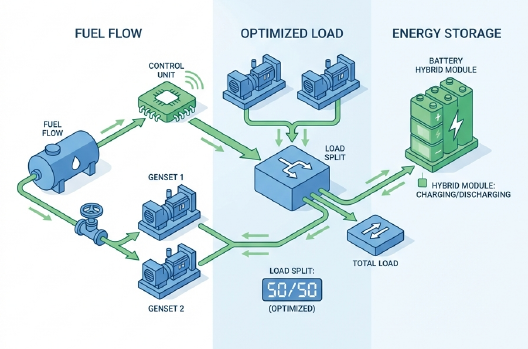
- Implementing automatic load controllers or paralleling control logic to shift loads between units.
3. Scheduled preventive maintenance
A disciplined maintenance program is essential. Key items that affect fuel efficiency:
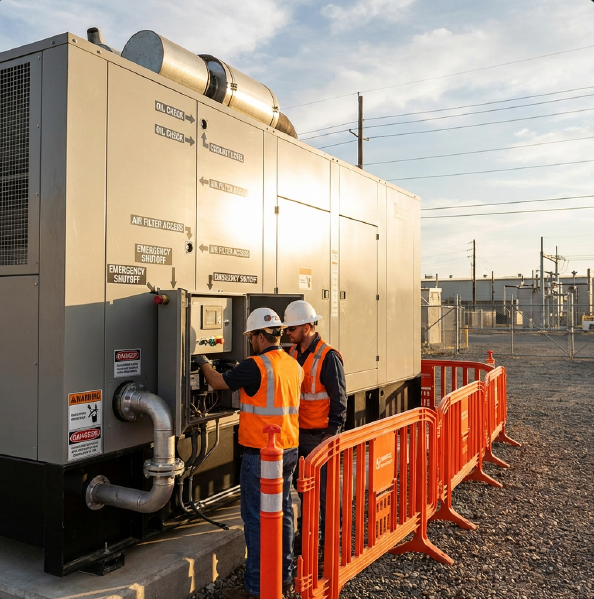
- Replace air and fuel filters on schedule, maintain clean intake air, and service turbochargers.
- Keep injectors, pumps, and governors calibrated to specification.
- Maintain cooling systems to avoid elevated combustion temperatures that increase fuel burn.
- Test and replace worn belts, hoses, and exhaust components that affect engine performance.
Manufacturers publish service intervals and test methods, for example guidance from major OEMs such as Cummins and Caterpillar is a good reference for calibration and parts care.
4. Monitor performance and measure specific fuel consumption
Install fuel flow meters and simple telematics where possible. Tracking liters per kWh (or gallons per kWh) reveals trends and lets you spot a drop in efficiency quickly. Even basic logging of run hours, fuel delivered, and metered output gains insights without heavy investment.
5. Improve fuel quality and storage practices
Poor fuel causes incomplete combustion and higher consumption. Best practices:
- Use clean, filtered fuel and rotate stored fuel to avoid long-term degradation.
- Keep storage tanks dry and inspect for water or microbial growth, use biocides or filters as needed.
- Use fuel polishing for long-term fleets or critical telecom sites in humid climates.
6. Use modern control systems and electronic governors
Electronic engine controls, adaptive governors, and predictive maintenance algorithms reduce fuel usage by optimizing injection timing and throttle behavior. Upgrading legacy units with modern controllers often yields fuel savings and reduces unplanned downtime.
7. Consider energy recovery and hybrid solutions
Where practical, recover waste heat for space or process heating. For sites with variable loads, hybrid systems combining batteries and diesel reduce run time and let engines operate in their most efficient range. Hybridization can be especially attractive for telecom towers and remote microgrids.
8. Operator training and standard operating procedures
Train on start/stop routines, warm-up and cool-down sequences, and dignified switching between grid and generator modes. Operational discipline prevents inefficient behaviors like long idling and frequent cold starts.
Choosing the right procurement and support model
For many organisations the fastest route to improved fuel efficiency is partnering with an experienced supplier who can assess load profiles, recommend right-sized equipment, and put a maintenance plan in place. If you need a bespoke proposal, our team provides tailored quotes and global sourcing for standby and prime power. See how to contact our sales engineers on our contact page: Ritewat contact page.
Cost vs. payback: simple ways to model savings
- Calculate current liters per kWh and cost per liter to determine baseline kWh cost.
- Estimate improvements: conservative 5 to 10 percent fuel reduction from tune-up and controls, or 15 to 30 percent with hybridization and load optimization.
- Model payback: fuel savings multiplied by annual run hours and fuel price gives annual savings, compare to upgrade or maintenance costs.
Common objections and answers
“Upgrades cost too much.” Short answer, staged upgrades and targeted maintenance often beat unplanned fuel and logistics costs.
“Telematics are expensive.” Low-cost fuel meters and cellular telemetry have short paybacks on remote sites where refueling trips are costly.
“We can’t take units offline.” Staggered service schedules and temporary rental units keep uptime while you tune or replace equipment.
Frequently asked questions
What is the ideal load range for best fuel efficiency?
Most diesel generators achieve best specific fuel consumption in the 60 to 80 percent load band. Running continuously at very low load increases fuel consumed per kW.
How often should I test specific fuel consumption?
Monthly trending for active sites is ideal, quarterly for low-use standby sets. Test after major service events and after any fuel change.
Does fuel quality really affect fuel consumption?
Yes, contaminated or degraded fuel leads to poor combustion and higher consumption. Good storage and filtration reduce both fuel and maintenance costs.
Can older generators be retrofitted to improve efficiency?
Yes, many older engines benefit from electronic governors, improved air filtration, and injector servicing. The economics depend on hours remaining and capital budgets.
Is hybridization worth it for small sites?
For small but critical sites with variable load, pairing batteries with diesel can significantly cut run time and diesel use. Evaluate on a site-by-site basis.
How do I choose between prime and standby-rated sets for efficiency?
Prime-rated units are designed for continuous operation and tend to be optimized for fuel efficiency under sustained loads. Standby units are sized for intermittent use; if you run daily, consider prime-rated equipment.
What routine maintenance reduces fuel consumption the most?
Air and fuel filter replacement, injector servicing, correct coolant and oil levels, and regular governor calibration are the highest-impact items.
Next steps for your organisation
Here’s the thing, small changes compound. Start with a baseline measurement, schedule a focused tune-up, and add controls or hybrid elements where the math supports it. If you want a walk-through assessment or a tailored proposal that factors local fuel prices, run hours, and environmental considerations, our engineers can help. Learn about our bespoke consultations and tailored quotes on our blog and resources area: Ritewat blog and guides.
Get expert support and tailored quotes
Ready to reduce fuel spend and improve reliability? Contact our team for fleet optimisation, maintenance contracts, and procurement support at https://ritewat.uk. We offer global sourcing, quality-checked manufacturers, warehousing and technical support suited to Africa, the Gulf, and international operations.
Conclusion
Maximizing fuel efficiency in diesel generators is a blend of the right equipment, disciplined maintenance, smart controls, and thoughtful operations. With a mix of measurement, targeted upgrades, and good fuel practices, most operators can cut fuel use and improve uptime without sacrificing reliability. Start with data, act on the highest-impact items, and scale improvements across your sites for measurable savings.